





Greenhouse Ventilation Systems: Windows, Fans, and Air Circulation Guide
Publish Time:2026-08-11 18:38:06 Author:Jucheng Views:136
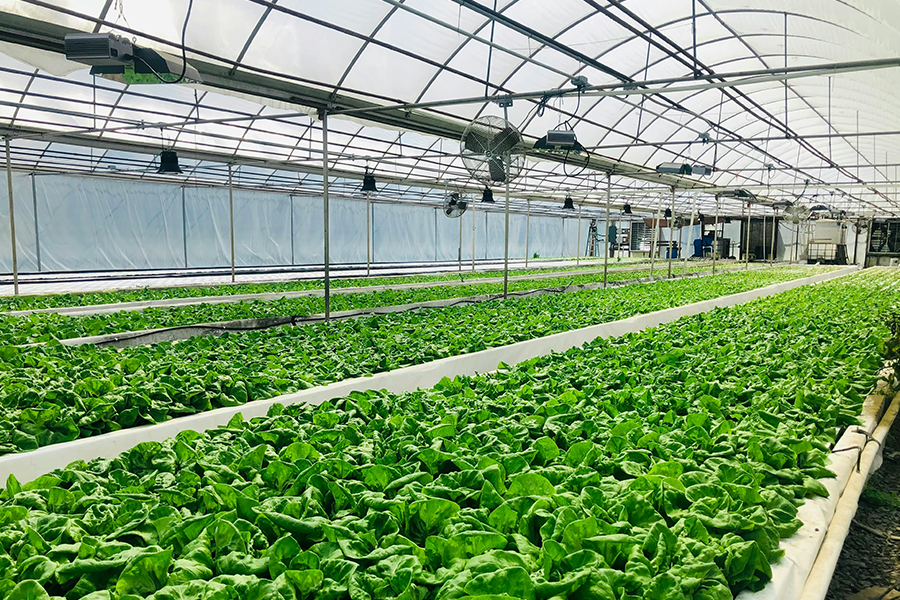
Ventilation is the single most important climate management tool in any greenhouse. No matter how sophisticated your heating and cooling systems are, without adequate air exchange, humidity will climb, temperature will spike, CO2 will be depleted, and fungal disease will take hold. The good news is that a well-designed ventilation system — combining natural ventilation through sidewalls and ridge vents with forced air circulation through fans — can maintain excellent growing conditions with minimal energy input. In this guide, we explain how ventilation windows, axial flow fans, and circulation fans work together to create a healthy greenhouse environment, and how to size and configure these systems for your specific house and climate.
Natural Ventilation: Sidewall Film Rolling and Ridge Vents
Natural ventilation uses the pressure difference created by wind and temperature to exchange air without mechanical energy. The most common natural ventilation method in greenhouse horticulture is the roll-up sidewall film: rolling up the lower portion of the polyethylene covering on both sidewalls creates an inlet, while the ridge vent or upper roof vent creates an outlet. Wind blowing across the house creates positive pressure on the windward side and negative pressure on the leeward side, drawing fresh air through the inlet and exhausting warm, humid air through the outlet. This system works well when wind is reliable — which is why it is the standard ventilation method in most of the world — but its performance degrades in still conditions, at night when there is no thermal buoyancy to drive airflow, and in very large greenhouses where the pressure drop across the house is too small to generate meaningful air exchange.
Ventilation Windows: Types and Applications
Ventilation windows — also called louvered vents or airing windows — are mounted in the greenhouse end wall or sidewall to provide controlled openings that can be opened and closed without rolling film. Our ventilation window range (JC-248 series) includes standard ventilation windows, butterfly-style ceiling vents, anti-arc ventilation windows, and rain-capped ventilation windows, each designed for different mounting positions and weather conditions. Standard ventilation windows are hinged panels that open outward to allow air through the end wall; they are manually operated and can be locked in any position from fully closed to fully open. Butterfly-style ceiling vents open upward like butterfly wings and are used in the roof or upper sidewall where outward-opening windows would not be practical. Rain-capped ventilation windows include an overhanging cowl that prevents rain from entering while still allowing airflow — essential in climates with frequent rain or in greenhouses where the sidewall is permanently rolled down.
Axial Flow Fans: Active Ventilation for Large Houses
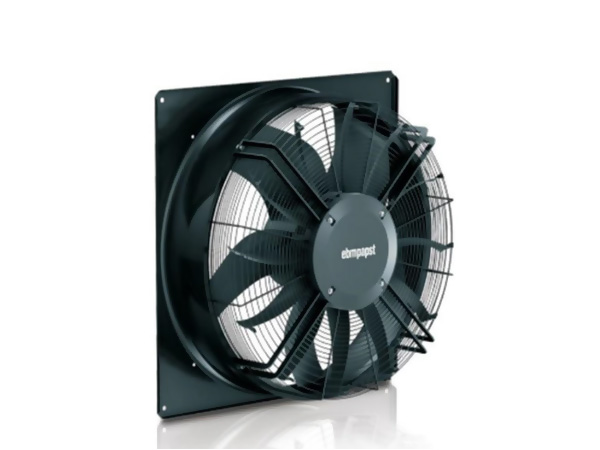
Axial flow fans (our JC-246 model) are the workhorse of active greenhouse ventilation. They move large volumes of air along the axis of the fan, creating directional airflow that exchanges air across the full length of the greenhouse. A properly designed fan ventilation system operates on the principle of tunnel ventilation: fans at one end of the house draw air in from the other end, creating a high-velocity air stream that provides effective cooling through convection and ensures fresh air reaches every part of the crop. Axial fans are sized by their airflow capacity in cubic meters per hour (m³/h) and their ability to overcome the static pressure created by filters, ducts, or the greenhouse structure itself. For a standard single-span greenhouse, the rule of thumb is to size the fan capacity for 40 to 60 air changes per hour in summer conditions — a 30-meter-long house needs fans rated at approximately 10,000 to 15,000 m³/h to maintain adequate ventilation in hot weather.
Circulation Fans: Eliminating Dead Zones and Temperature Stratification
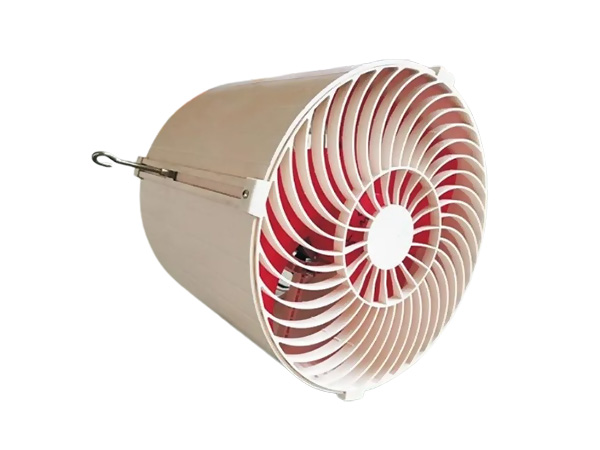
Circulation fans (our JC-247 plastic circulation fan) do not exchange air — they move air within the greenhouse to eliminate stagnant zones and prevent temperature and humidity stratification. In any greenhouse, warm air rises to the apex while cool air sinks to the floor, creating vertical temperature gradients of 3 to 8°C that cause uneven crop growth. Horizontal air movement from circulation fans breaks up these layers, maintains uniform temperature and humidity throughout the growing area, and strengthens plant stems through gentle air movement. Circulation fans are typically mounted at canopy height and arranged in a pattern that creates a gentle circulating airflow — usually one fan every 6 to 8 meters along the length of the house, oriented to push air along the canopy in one direction in adjacent bays. The airflow should be enough to rustle leaves slightly but not so strong that it causes wind stress on the crop.
Choosing the Right Ventilation Combination for Your Greenhouse
The right ventilation system depends on your climate, your crop, and your greenhouse design. In temperate climates with reliable wind, a combination of roll-up sidewalls and ridge vents provides adequate ventilation for most crops with no energy cost. In hot, humid climates — or in greenhouses used for summer production in warm regions — passive ventilation is insufficient and active fan ventilation is necessary. In greenhouses with high-value crops where uniformity is critical — for example, propagation or cut flower production — circulation fans should always be included regardless of climate, because they eliminate the dead zones that cause uneven growth. Our JC-248 ventilation windows, JC-246 axial fans, and JC-247 circulation fans are designed to work together as a complete system: ventilation windows or roll-up film provide air exchange, and fans provide the circulation and forced airflow that ensures every plant receives fresh, properly tempered air.
Fan Maintenance and Energy Efficiency Tips
Fan maintenance is straightforward but critical, because a fan that is not performing to specification wastes electricity and provides inadequate ventilation. Clean fan blades and housings at the start of each season — dust and plant debris on the blades reduce airflow by 10 to 20 percent and unbalance the fan motor, increasing wear. Check motor bearings for any roughness or noise; replace the motor if bearings are worn, because a failing motor will seize and can cause the fan to stop completely during a critical heat period. Inspect fan shutters and louvers for free movement; stuck shutters reduce effective airflow and can cause the fan motor to work against backpressure, increasing energy consumption and shortening motor life. On axial flow fans, also check the safety grille for any damage that could allow debris to enter the fan. For circulation fans, ensure mounting brackets are secure — a vibrating fan that comes loose can damage the greenhouse structure or injure workers.
Related News
-
Greenhouse Card Slot Channels: Selection Guide for Pipe Sizes Ø18-40
Card slot channels are the backbone of every professionally installed greenhouse pipe system. Learn how to choose the rig...
-
How to Source and Purchase Quality Greenhouse Accessories: A Buyer's Guide
Sourcing quality greenhouse accessories at the right price is critical for commercial growers. This guide covers what to ...
-
Fixed Film Clamps for Greenhouse: Complete Selection Guide Ø18-Ø40
Fixed film clamps are the essential hardware that holds greenhouse covering film securely to the frame. This guide covers...
-
Greenhouse Vegetable Growing Guide: Tomatoes, Cucumbers, and Peppers
Growing vegetables in a greenhouse extends the season and improves quality. This guide covers tomato, cucumber, and peppe...
-
Greenhouse Humidifier and Irrigation Accessories: JC-242, JC-241, and More
Humidity control and irrigation accessories complete the modern greenhouse. Learn how centrifugal humidifiers, lifting ro...