





Greenhouse Climate Control Automation: A Practical Guide
Publish Time:2026-08-08 11:59:43 Author:Jucheng Views:171
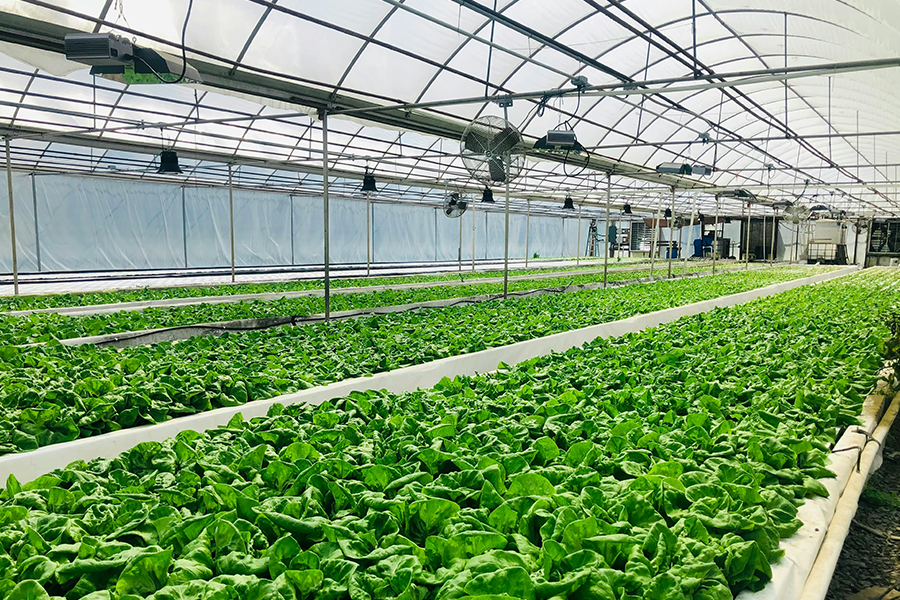
Inside a greenhouse, every degree and every percentage point of humidity influences photosynthesis, disease pressure, and fruit set. Manually opening vents, switching heaters, and rolling side curtains dozens of times a day is exhausting — and it is never precise enough. Automation changes that. As a manufacturer of greenhouse hardware for commercial growers, we have watched our customers move from manual side-vent operation to fully automated climate control, and the consistent result is better yield, less labor, and fewer crop losses. This guide explains how sensors, controllers, and actuators work together in a smart greenhouse, and how to build an automation system step by step.
What Gets Automated in a Modern Greenhouse
Almost everything that affects the plant environment can be automated: roof and side ventilation, exhaust fans, heating, shading, irrigation, misting, and CO2 enrichment. The principle is simple — sensors measure conditions, a controller compares them against set points, and actuators respond. The most important actuators in smaller and medium greenhouses are ventilation drives: motorized roll-up film systems, rack-and-pinion vents, and louvered side walls. Our manual and motorized roll-up systems are widely used for this exact purpose, because good ventilation is the cheapest climate control you can install.
Temperature Sensors and Thermostats
Temperature is the backbone of greenhouse control. Sensors should sit at canopy height in an aspirated radiation shield — not in direct sun, where a bare sensor can read 5°C or more above the true air temperature. Choose sensors with accuracy of about ±0.5°C and calibrate them twice a year. Modern controllers use separate day and night set points, plus heating and cooling bands to prevent equipment from short-cycling. A typical tomato regime, for example, runs 21 to 24°C by day and 16 to 18°C by night, with ventilation staged to open before temperature climbs into the danger zone.
Humidity Sensors and Dehumidification Triggers
Humidity determines disease risk. Relative humidity above 85 percent for extended periods promotes botrytis, mildew, and poor pollination. Capacitive humidity sensors are reliable and inexpensive; place them alongside the temperature sensor and verify readings against a wet-bulb psychrometer occasionally. Rather than controlling humidity directly, most controllers act on vapor pressure deficit (VPD) — the drying power of the air. When VPD falls too low, the controller responds by ventilating, heating slightly while venting, or running horizontal fans to break up stagnant air pockets around the crop.
CO2 Sensors and Enrichment Control
In a sealed greenhouse, CO2 can drop below 300 ppm during bright daylight, starving photosynthesis and limiting growth. CO2 enrichment to around 800 to 1,000 ppm can increase yields of crops like tomato and cucumber by 15 to 30 percent when light is adequate. Nondispersive infrared (NDIR) sensors are the standard choice; they must be calibrated regularly because drift is common. Enrichment should be enabled only when vents are closed or nearly closed, otherwise the gas simply escapes — which is why the controller coordinates CO2 injection with ventilation position.
Integrated Climate Controllers
The heart of a smart greenhouse is the integrated controller, which balances competing demands. It might, for example, open vents gradually before turning on fans, heat and vent simultaneously to remove humidity without dropping temperature, or close energy screens at night to retain heat. Entry-level controllers handle temperature and humidity with relay outputs; professional controllers use analog inputs, proportional valves, and weather stations that anticipate rain and wind. When buying, look for expandable inputs, a clear user interface, and backup settings that keep the house safe if power or communication fails.
Remote Monitoring and Alerts
Remote access turns a climate controller into a management tool. Cloud dashboards show trends, and SMS or app alerts notify you the moment temperature exceeds a threshold or power fails — critical when a heater outage in winter can ruin a crop in hours. Data logging also reveals patterns: a recurring morning humidity spike, a slow vent motor, or a heater that cycles too often. In our experience, growers who review climate data weekly catch equipment problems early and fine-tune set points seasonally, which compounds into noticeably higher quality and lower energy bills.
Related News
-
Greenhouse Supporting Rollers, Bearing Wheels, and Dragging Wheels Guide
Supporting rollers, bearing wheels, and dragging wheels provide smooth, low-friction support for moving components in com...
-
Greenhouse Roof Drainage and Pipe Fittings: Elbow Connections and Drainage Design
Proper roof drainage keeps greenhouse structures dry and stable. Learn how elbow connections, pipe connectors, and draina...
-
Greenhouse Propagation and Nursery Seedling Production: Equipment and Techniques
Propagation and nursery production are the most demanding greenhouse applications for climate control and hardware precis...
-
Greenhouse Irrigation Systems: Drip Watering, Fertigation, and Scheduling Guide
Water is the lifeblood of any greenhouse operation, and the irrigation system that delivers it must be designed for relia...
-
Greenhouse Insect Screen and Screen Door Systems: Wire Tighteners, Gear Racks, and More
Insect screens and screen door systems protect greenhouse crops from pests while maintaining ventilation. Learn how to in...